
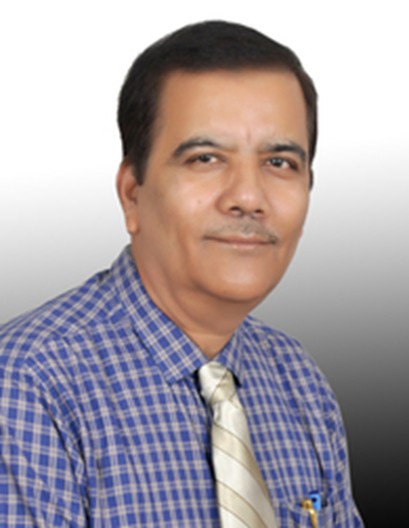
Dr. Shyam Narayan Jha
President, ISAE
Dr. S. N. Jha is a self-cranked mentor of scientists, entrepreneurs and startups and is a globally ranked, based on Scopus citations’ matrices, among top 2 % scientists across research fields. He is a proven research leader, manager, institution builder and a great motivator. He has revolutionized makhana industries, pioneered sensor based Agricultural Mechanization and Automation in general and food quality and safety in particular. He has transformed Agricultural Engineering education and activities across country as Dy. DG, ICAR. Currently he is President of the Indian Society of Agricultural Engineers and Bihar Agriculture Science Academy.
He is pioneering researcher on makhana (Euryale ferox) processing. Output of those researches have spread in national/International markets. His efforts helped in getting GI tag as Mithila makhana, Harmonized System of Nomenclature (HSN) Code, and establishment of National Research Centre for Makhana Darbhanga and Makhana Board. Area of production in last 4-5 years have been more than doubled in Bihar whereas its cultivation is spreading in other states such as West Bengal, Chhattisgarh, Rajasthan, J & K, Telangana etc. Efforts of 38 years of Dr. Jha made makhana famous as super food, has improved livelihood of millions of people in India and made available a healthy alternative food across the globe. He is therefore known as makhana man of India and was honored with Mithila Vibhuti Samman. Dr. Jha is pioneering researcher for nondestructive sensor based technologies for food safety/quality determination in India and is the first initiator of establishment of food testing laboratories (MoFPI established hundreds of NABL accredited labs and FSSAI has about 247 laboratories in panel) in India. Modeling for internal pressure during grain roasting and modified Beverloo equation for grain-hopper feeding mechanism design, modeling on whey movements during paneer (fresh/cottage cheese), are his addition to theory of Sciences. These contributions opened new vistas of application of sensor, AI, machine learning and robotics research in Indian agriculture and helped in proving speed and scale in Indian Agriculture, and getting safer and healthier foods for millions.
Development of cooled storage structure and Horticulture Train, which latter implemented by the Government of India as Kishan Train are reducing post-harvest losses of perishables by 4-5%. His recommendations for uniform norms for allowable storage loss, storage protocols and pulse milling outturn in FCI godowns as team leader have been enacted in whole country and is saving more than Rs. 500 crores annually. Post-harvest loss assessment method perfected under his leadership was recognized by FAO and using the data Food loss index has been developed and adopted by Government of India for reporting under SDG 12.3 for getting target of food loss reduction fulfilled. Decentralized food grain storage and Secondary Agriculture concepts by him have been implemented by the Government of India, whereas Karnataka state has established a new directorate. Chhana ball (cottage/fresh cheese) making machine enabled Amul to manufacture Rassogollah and Gulab Jamun (Indian milk based sweets) continuously. Work of Dr. Jha has impacted government policies for storage, transport, processing, and mechanization, and helped in savings of millions of tons of foods for needy people world over. Making import export norms for government and adoption of quality stainless steel in agri-machinery and utensils though BIS standards in the country have impacted significantly in the world economy. Drives for opening of Agricultural Engineering department/colleges in states by him have resulted in recommendation of the Parliament Standing Committee on Agriculture, Animal husbandry and Food Processing. Chhattisgarh and many other states are in the process of opening the department/Directorate of Agricultural Engineering. He has made the Indian Society of Agricultural Engineers a truly International and one of the biggest Scientific Society of Indian Agriculture. New B. Tech. courses in Agricultural Engineering and related subjects upon his persuasion have also been started/being sanctioned in some states. Dr. Jha’s interventions in curriculum development resulted in inclusion of contemporary courses such as Sensor, Robotics and AI in Agriculture and Food safety and Quality in UG. Dr. Jha’s efforts for institution building such as establishment of KVK Barh, National Research Centre for Makhana, National Makhana Board, and restructuring/assigning contemporary names and mandates of institutes and almost of all All India Coordinated Research Projects and regional stations of Engineering institutes under ICAR has accelerated the research in Artificial Intelligence, Deep learning/machine learning, robotics and automation in Indian Agriculture. He was successful in opening of New division on Sensor and Automation in engineering institute and in starting of ICAR National Eligibility Test (NET) and ICAR-Agricultural Research Services (ARS) in two new disciplines (Electronics and Instrumentation and Textile Manufacturing Technology) Establishing Bihar Agricultural Science Academy, and National Makhana board by the Government of India on all his efforts are noteworthy.
He is credited with 16 commercialized/adopted (nine granted patents including one US patent) technologies, 346 publications (including 09 books, 28 book chapters), 33 awards/recognitions including ICAR-Rafi Ahmed Kidwai, NRDC Societal Innovation prize, NAAS fellowship etc. Dr. Jha has been chairman/member of numerous scientific committee/Board of Governor/Authorities. He is currently working as the President of the Indian Society of Agricultural Engineers, Bihar Agriculture Science Academy and mentors/guides for startups on makhana and NIR based agriculture instrument with IIT Madras, Chennai and shaping the younger minds for fulfilling the aspiration of developed India by 2047. Detailed biodata may be seen at: Bio-Data of Dr. S. N. Jha – Snjha.in List of publications at: List of Publications – Snjha.in